Why we still cut on the bias
Bias cutting wastes cloth. On a 150cm-wide bolt you lose close to a third of the metreage to the angle alone, and the cutting table takes…
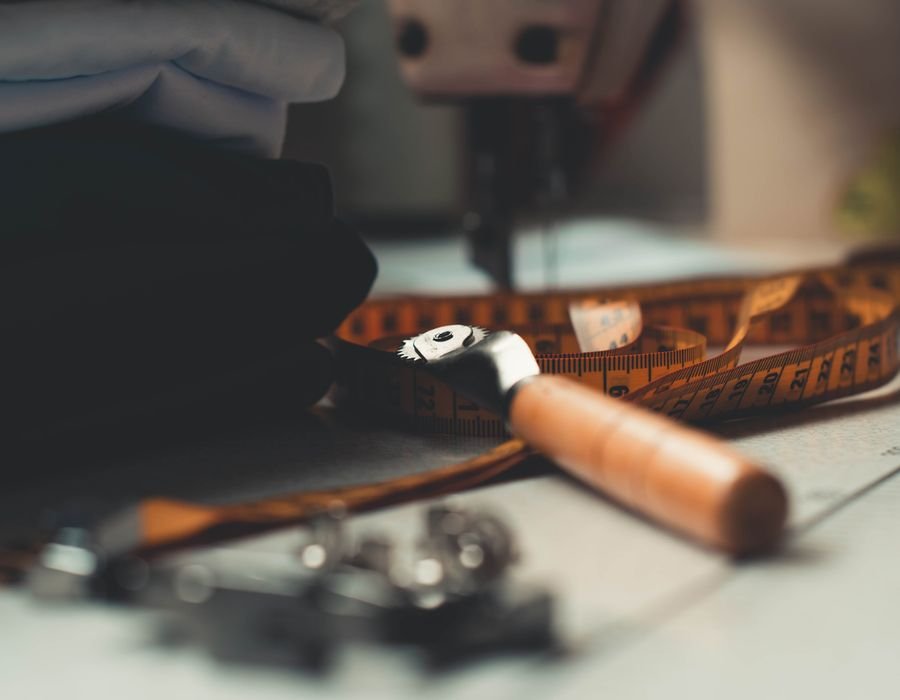
Bias cutting wastes cloth. On a 150cm-wide bolt you lose close to a third of the metreage to the angle alone, and the cutting table takes twice as long because every panel has to be laid and weighted by hand rather than stacked and cut in a block.
We do it anyway, for one reason: a bias-cut panel falls differently. Cloth cut on the straight grain hangs from the shoulder like a curtain — flat, predictable, and honest about the body underneath. Cloth cut on the bias rotates forty-five degrees through the weave, which gives it stretch without elastane and lets it move around a hip or a shoulder rather than across it.
That is the whole trick behind the silk slip and the satin midi. Neither has a zip at the waist, neither has a panel of stretch fibre, and neither will cling in the way a straight-cut version would. The garment follows the body because of geometry, not because we added plastic to the fibre.
What it costs us
Two things. The first is cloth: a bias dress uses roughly a third more silk than the same dress cut straight. The second is time, and therefore the wage bill, because a bias seam wants to move while you sew it and has to be pinned and stabilised every few centimetres.
We think both are worth paying. A garment that hangs properly is worn more often, and a garment worn more often is the only kind of sustainability that actually holds up.